
Storm Damage Assessed and Addressed Before It Compounds
Storm and hail damage roof repair in Gothenburg for homes showing impact damage, displaced shingles, or active water intrusion
Granule loss from hail impact and hairline cracks in shingle tabs look minor from the street but represent a measurable reduction in how long the roof will repel water before failure becomes visible indoors. In Gothenburg, older frame homes with shingles that were already mid-life at the time of a storm show this damage most clearly: the shingle surface has less structural depth to absorb impact, and granule adhesion is weaker on material that has already begun to dry out. 308 Exteriors inspects roofs after storm events, documents the damage for insurance purposes, and handles both emergency stabilization and permanent repair or replacement.
After a storm, the crew inspects the entire roof surface for hail impacts, soft spots where decking has been compromised, and displaced or lifted shingles, photographing each area of damage in detail. When water is actively entering the structure, emergency tarping or temporary securing of open areas happens first to stop intrusion while the insurance scope is being set. Once the claim scope is agreed upon, the permanent repair or replacement proceeds with the crew managing the roofing work from start to finish so the homeowner is not left coordinating the contractor side of the claim independently.
Call 308 Exteriors at (308) 529-2445 to have a licensed, insured crew inspect your roof and prepare the documentation needed to support your insurance claim.
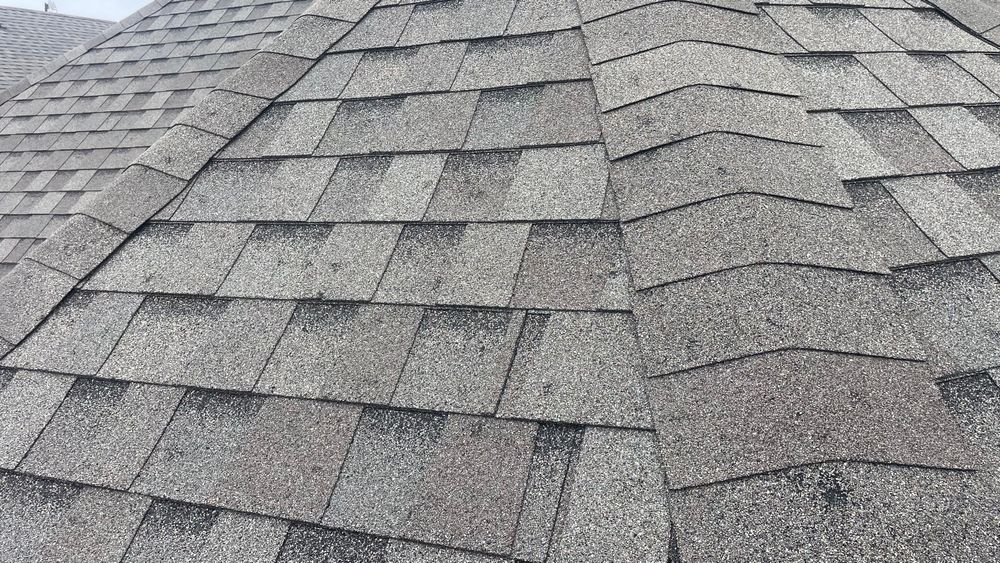
Why Hail Damage Requires More Than a Visual Check from the Ground
The indicators that adjusters and roofing contractors look for after hail are not visible from a ladder at the eave or from the yard. Bruised shingles show as soft circular depressions in the mat beneath the granule layer, and dented metal vents and ridge caps are confirmation points that establish the storm's intensity on the specific property. A ground-level look at granule accumulation in the gutters can suggest a problem, but the full picture requires walking the roof plane and pressing the surface to feel whether the fiberglass mat has fractured under the impact point.
Once the inspection is documented and the scope is confirmed through the claim process, the repaired or replaced sections restore the roof's ability to shed water without accelerated deterioration at the impact sites. Dented vents and displaced flashing are replaced as part of the scope rather than left in place, which matters because a compromised vent collar is an entry point for water independent of shingle condition. After the work is complete, the roof surface shows no exposed mat at impact sites, flashing sits tight at all penetrations, and the home's interior stops accumulating moisture at the affected ceiling areas.
308 Exteriors handles the roofing side of the process—inspection, documentation, emergency work, and permanent installation—so that what the homeowner manages is the claim itself rather than also finding and directing a contractor. The company is licensed and insured and backs completed storm work with a 5-year craftsmanship warranty.
What Homeowners Ask About Storm and Hail Damage Work
The following questions address how storm and hail damage is identified, documented, and repaired. The process applies to homes across Gothenburg and the surrounding area, including properties where aging shingles were already showing wear before the storm event.
What specific indicators does the crew look for during a post-storm inspection?
The crew checks for soft circular bruise marks in the shingle mat, granule displacement that exposes the asphalt layer beneath, dented or displaced metal components including vents and flashing, and any lifted shingle courses where wind has broken the seal strip bond.
How does emergency tarping work before permanent repairs begin?
Tarping is installed to cover any open areas where shingles have been displaced or decking is exposed, using mechanical fastening at the edges rather than adhesive alone so the tarp holds under subsequent wind without lifting. It is a stabilization measure only and does not constitute a repair.
How does the documentation process support an insurance claim?
The crew photographs each damage point with reference markers so the adjuster can match the images to specific roof locations. Dented metal components are included because they establish the hail size that struck the property, which affects how the claim is evaluated for repair versus replacement scope.
Why do older Gothenburg frame homes show hail impact more clearly than newer construction?
Shingles on older homes have typically lost meaningful granule depth and mat flexibility over time, so the same hail event that leaves a newer shingle intact causes a visible mat fracture on aged material. This makes the damage easier to document but also means the roof is closer to the threshold where repair transitions into full replacement.
What does the finished repair look like compared to the surrounding undamaged shingle field?
Replaced shingle sections should sit flush with the surrounding surface with consistent granule density and no visible fastener heads in the field. Replaced flashing should be pressed tight to the penetration it covers with no gaps visible at the seam where the flashing meets the shingle course.
308 Exteriors also handles storm and hail damage roofing in Cozad, Kearney, North Platte, and Lexington. To have your roof inspected and documented after a storm event, contact 308 Exteriors at (308) 529-2445 to arrange an assessment.